Mother s Day Card. Cut out of Paper
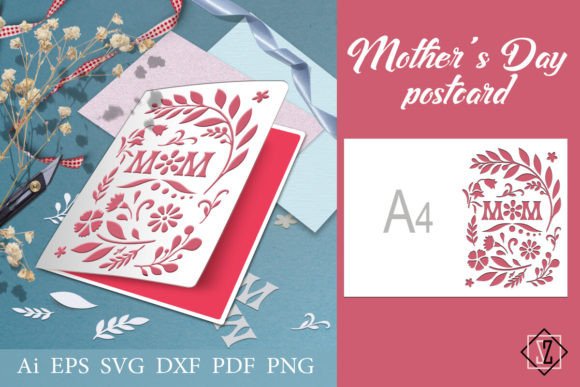
I have spent years reviewing digital assets for embroidery projects, and I often find myself disappointed when a file promises one thing but delivers another in the hoop. Today, I am evaluating Mother s Day Card. Cut out of Paper, a design categorized under Crafts and Graphics. At first glance, the description suggests a paper craft project: an A4 sheet folded in half with a floral stencil to be cut and glued. However, as a designer looking at this from an embroidery perspective, my immediate question is: how does this translate to thread?
The concept of a "cut-out of paper" aesthetic is incredibly popular in modern handmade goods. It evokes a sense of whimsy, softness, and tactile warmth that fits perfectly with Mother's Day themes. But translating a flat paper illustration into a machine embroidery design requires more than just digitizing lines; it demands an understanding of stitch density, fabric texture, and visual hierarchy. If you are an Etsy seller or a small business owner planning to use this as a digital embroidery file for your next collection, here is my honest assessment of its potential.
First Impressions and Visual Personality
The mood of Mother s Day Card. Cut out of Paper is undeniably gentle. The floral motif suggests spring, renewal, and affection. In a real-world scenario, this design feels like it belongs on a product that needs to feel personal and intimate. It isn't a bold, high-contrast logo for a sports team; it is a decorative accent meant to soften a garment or home decor item.
When I visualize this design being stitched, the "paper cut" style implies layers. In embroidery terms, this would likely rely on a combination of satin stitches for outlines and fill stitches for the floral shapes to create depth. The challenge lies in maintaining that crisp, clean edge characteristic of paper cutting when working with thread. If the digitization uses too much stitch density, the fabric might pucker, ruining the delicate illusion of a light paper cutout. Conversely, if the details are too sparse, the floral elements might look muddy on textured fabrics.
Real-Life Application: The Custom Tote Bag Scenario
Let me walk you through a practical use case. Imagine you are preparing inventory for a local craft fair. You want to create a line of eco-friendly tote bags featuring unique, hand-stitched designs. You decide to incorporate Mother s Day Card. Cut out of Paper onto a natural canvas tote bag intended for a boutique client.
Here is where the design shines. The floral theme pairs beautifully with the rustic texture of canvas. When stitched in white or cream thread, the design pops against the beige background, mimicking the look of a die-cut sticker applied to paper. Customers browsing the booth would see a finished product that looks professional yet handmade. The design acts as a focal point without overwhelming the simple utility of the bag.
However, consider the reverse scenario. What if you tried to put this same design on a dark navy sweatshirt? The "paper cut" effect relies heavily on contrast. Without a proper underlay or a contrasting backing fabric (like a white applique base), the design might get lost in the dark weave. This highlights why checking your thread colors and fabric choice is critical before committing to a large production run.
Navigating Technical Challenges
While the concept is strong, there are specific areas where Mother s Day Card. Cut out of Paper requires careful handling during the stitching process. As an experienced reviewer, I advise caution in the following situations:
- Small Hoop Sizes: If the design includes intricate corners or tiny lettering, ensure your hoop size allows for enough stability. Small hoops can struggle with complex curves, leading to misalignment.
- Textured Fabrics: While the design suits canvas well, highly textured fabrics like bouclé or heavy chenille can obscure fine details. The "cut-out" edges might become jagged rather than clean.
- Stretchy Materials: Avoid using this design on thin, stretchy jersey knits without a heavy-duty stabilizer. The tension required for the floral fills could cause the fabric to distort, making the card shape look warped.
- Dense Stitch Areas: If the original artwork has dense clusters of petals, verify the digitized stitch density. Too many stitches in one area can make the final product stiff and difficult to wear or wash frequently.
For products like embroidered patches or apron decorations, the durability of the design is paramount. A paper-cut style often features thin lines connecting larger shapes. If these connections are not reinforced properly in the digitizing phase, they may break after the first few washes, especially on items like kitchen towels that undergo frequent laundering.
Impact on Product Value and Brand Consistency
In the world of craft business and Etsy listings, presentation is everything. A well-executed design elevates the perceived value of your handmade product. Using Mother s Day Card. Cut out of Paper effectively can signal attention to detail to your buyers. It shows that you understand the nuance of design translation from screen to fabric.
If the design is executed poorly—resulting in puckering or color bleeding—it damages customer trust. Buyers expect a finished product that looks as good as the printable mockup they saw online. A sloppy execution can make even a high-quality fabric item look cheap. On the other hand, a crisp, clean application of this floral design reinforces brand consistency and positions your shop as a source of premium, thoughtful gifts.
This design also has strong potential for personalized gifts. Imagine adding a custom name in a complementary font inside the fold of a card-style pillow cover or a baby blanket. The versatility of the floral theme allows it to fit into various niches, from nursery decor to wedding favors, provided the scale is adjusted correctly.
Practical Designer Notes Before You Stitch
Before you upload this file to your machine or start producing for sale, follow these essential steps to ensure success:
- Test on Scrap Fabric: Never go straight to the final product. Run a test on a scrap piece of the exact fabric you plan to use. This helps you gauge how the fill stitch interacts with the material grain.
- Check Black and White Mockups: View the design in grayscale to ensure the contrast holds up. Sometimes colors hide issues that black and white reveal immediately.
- Review Stabilizer Needs: Given the "cut-out" nature, you may need a tear-away or cut-away stabilizer to support the edges and prevent distortion. Confirm the correct type for your fabric weight.
- Inspect Small Details: Zoom in on the digitized file. Are the tiny floral centers distinct? If they are too small, they will disappear in the thread.
- Confirm Licensing: If you intend to sell finished items made with this design, double-check the license terms. Ensure you have the right to use it for commercial embroidery projects.
The description mentions printing a stencil and folding an A4 sheet, which suggests the source might be a vector graphic or a print pattern rather than a native embroidery file. If you are converting this yourself, pay close attention to the transition between the outline and the fill. The goal is to maintain the elegance of the original paper art while ensuring the mechanical reality of embroidery is respected.
Final Verdict
Mother s Day Card. Cut out of Paper is a charming concept with significant potential for holiday embroidery and boutique branding. It works best when paired with stable fabrics and appropriate thread choices that enhance the floral theme. For designers and sellers looking to add a touch of whimsy to their small shop products, this design offers a solid foundation. Just remember that the magic happens in the preparation: test thoroughly, respect the fabric, and ensure the technical execution matches the artistic vision.
Whether you are creating a one-off gift for a loved one or building a catalog of custom apparel, taking the time to evaluate the design's limitations and strengths will save you headaches and result in a superior finished product. Happy stitching.